
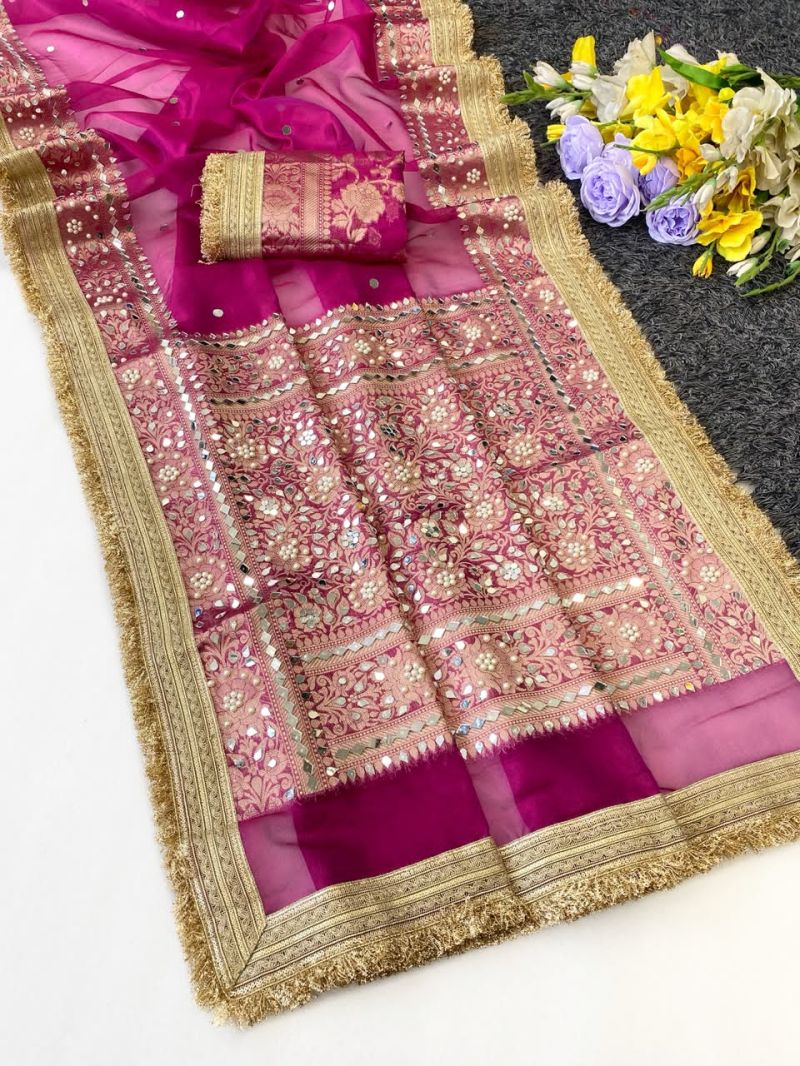
| Catalog Name | Maharani Bm Soft Tissue Mirror Worked Traditional Saree Collection |
| Catalog No | 20107 |
| Per Piece Price | ₹ 2,999.00 + 5 % GST |
| Full Catalog Price | ₹ 8,997.00 |
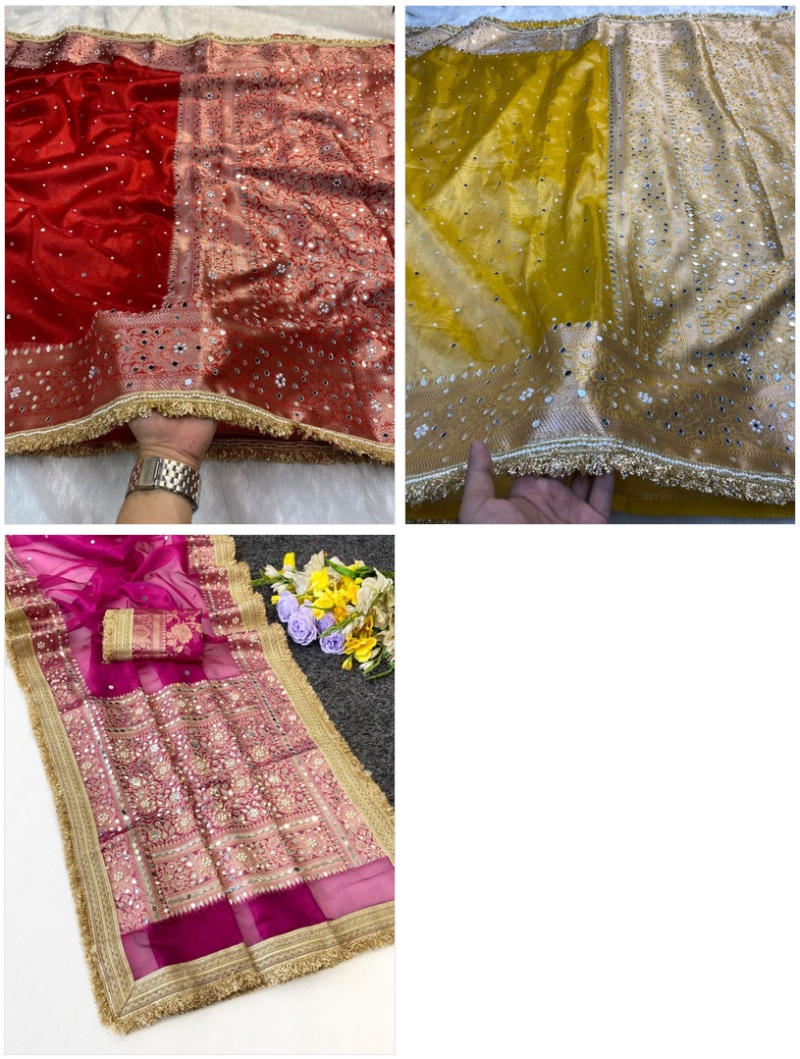
| Total Design | 3 |
| Fabric | Silk |
| BLOUSE | UNSTITCHING |
| Weight | 6 Kg |
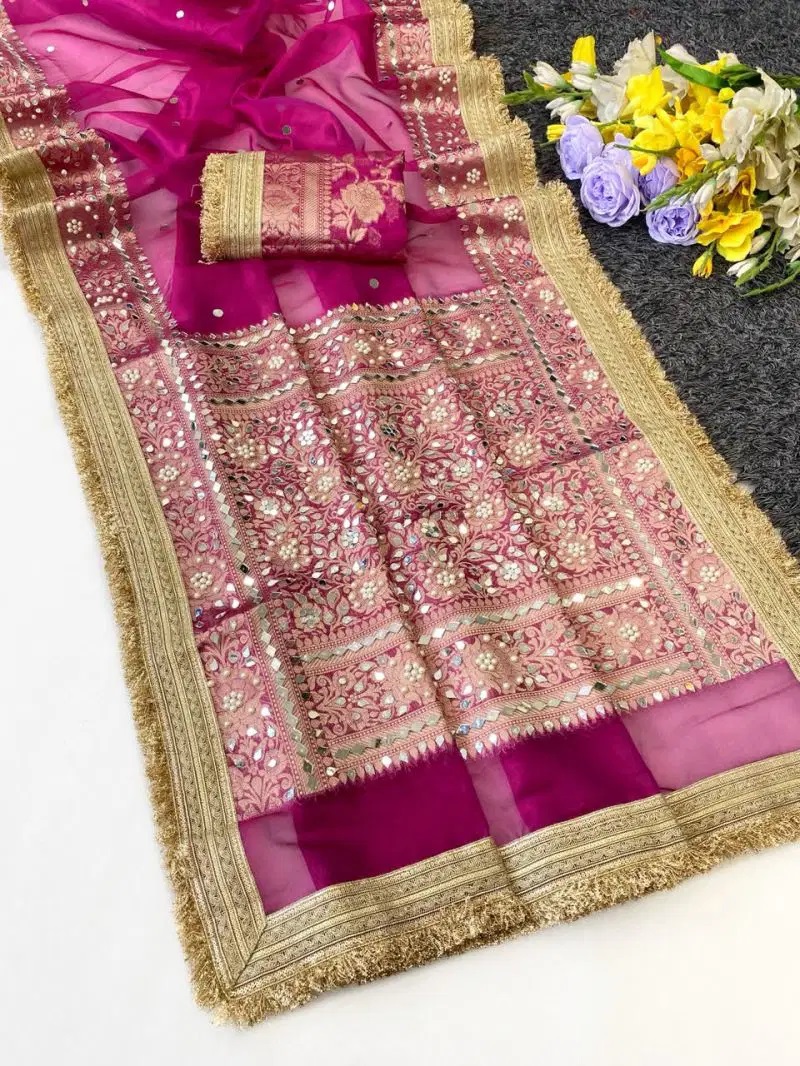
| Fabric Description | Saree Fabric: Soft Tissue | Pallu: Weaving Heavy Mirror Work With Moti Work & Kiran Lace Border | Blouse: Floral Design | Saree Length: 5.5 Mtrs | Blouse Length: 90cm |
₹ 0.00 X 3
₹ 400.00 X 3
₹ 450.00 X 3
₹ 65.00 x 3
₹ 200.00 x 3
 Estimated Delivery : ( 6-8 working days )
Maharani Bm Soft Tissue Mirror Worked Traditional Saree Collection is designed for buyers searching for Mirror Worked Traditional Saree Wholesale Price with a classic Indian fashion identity and decorative mirror detailing. The soft tissue base brings a delicate, light-catching appearance, while the mirror work adds visible ethnic character to the saree. This collection can be suitable for saree boutiques, traditional-wear retailers, and online fashion stores and resellers looking to add heritage-inspired sarees to their wholesale assortment.
The soft tissue surface gives Maharani Bm an important visual advantage: the saree can respond to surrounding light as it moves and folds.
This quality creates a refined appearance without requiring the fabric to be heavily textured. When displayed on a hanger, the surface can look relatively understated, while the same saree can become more luminous once pleated and draped.
For retailers, this makes the fabric worth highlighting independently from the mirror work. A close-up fabric photograph and a fully draped image can communicate two different aspects of the product.
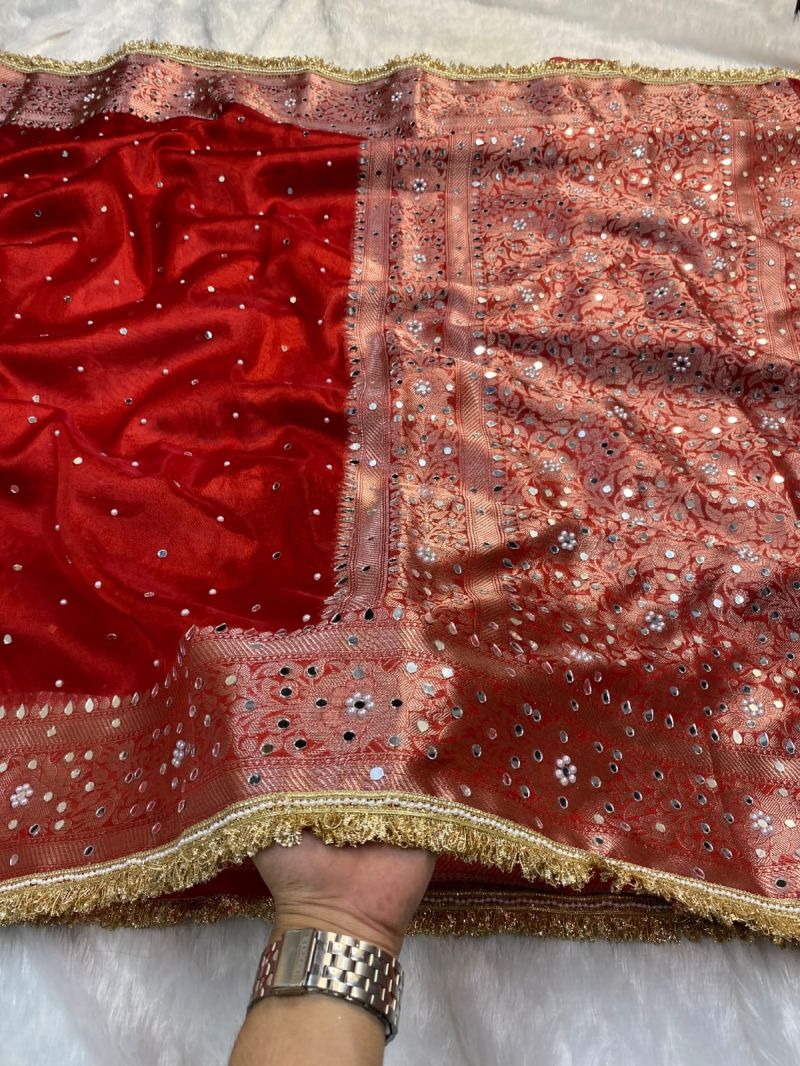
Mirror work gives the collection a distinctly decorative identity. Individual reflective elements can catch light and create small highlights across the saree, adding visual interest without making the entire surface appear uniform.
The placement of the mirror work also matters. Decorative details positioned across the visible body, border, or pallu can become more noticeable after draping than when the saree is viewed flat.
For product descriptions, the important message is therefore not simply that the saree has mirror work, but that the work contributes to its traditional visual character.
The combination of soft tissue and mirror detailing creates a contrast between a luminous fabric surface and defined decorative elements.
The tissue contributes overall softness and light reflection, while the mirrors introduce sharper points of visual interest. This allows the saree to appear detailed without depending on multiple unrelated embellishment techniques.
For a traditional collection, this balance can create a more focused design identity and make the saree easier to position within a heritage-inspired assortment.
Mirror-work sarees can look very different depending on whether the decorative elements are small and distributed or larger and concentrated.
Smaller motifs can create a more delicate appearance across the fabric, while larger focal points may become more prominent when the saree is draped.
Retailers can use close-up and full-length photographs together to communicate this difference. Buyers should be able to understand not only what the mirror details look like but also how large those details appear relative to the complete saree.
The pallu is usually one of the most visible parts of a saree once it is worn over the shoulder. For a mirror-worked design, this makes the pallu an important section for both photography and merchandising.
A dedicated pallu image can show the decorative treatment more clearly, while a model photograph demonstrates how much of the pallu remains visible in a practical drape.
This helps buyers understand the final appearance rather than evaluating the saree only as an open fabric.
| Avg Price | ₹ 963.00 |
| Total Design | 9 |
|
View Catalog
|
| Avg Price | ₹ 359.00 |
| Total Design | 6 |
|
View Catalog
|
| Avg Price | ₹ 2,999.00 |
| Total Design | 5 |
|
View Catalog
|

| Avg Price | ₹ 1,665.00 |
| Total Design | 5 |
|
View Catalog
|

Goods all receiving with good condition & fast delivery. Highly recommended
Sarawanan - malaysia
Nice collection with very good quality
Deepakshi Bhardwaj - United States
I am very satisfied with your service you delivered me on time and fabric quality is also very good
Urvish - Australia
Superb in service and first time i purchased through fashion export without trust BUT after received my parcel 100/100% i trusted becasue their service support and attempting calls was excellent , quality of material also 100% perfect
kiran chellapilla - India
I recently purchased a saree from Fashion Export and I must say, I’m extremely impressed with both the product and the service. The saree was exactly as shown in the pictures—elegant, well-crafted, and of excellent quality. The fabric felt luxurious, and the design was intricate and beautifully done.
Ananthy Kartikar - malaysia